Saturday, November 28, 2015

Turkey-Russia jet downing: Moscow announces sanctions

Turkey-Russia jet downing: Moscow announces sanctions

  • 3 hours ago
  •  
  • From the sectionEurope
Composite image of Turkey's Recep Tayyip Erdogan and Russia's Vladimir PutinImage copyrightAP
Image captionNeither Turkey's Recep Tayyip Erdogan nor Russia's Vladimir Putin show any sign of backing down
Russia has announced a package of economic sanctions against Turkey over the shooting down of a Russian jet on the Syrian border on Tuesday.
decree signed by President Vladimir Putin (in Russian) covers imports from Turkey, the work of Turkish companies in Russia and any Turkish nationals working for Russian companies.
The decree also calls for an end to charter flights between the countries.
Turkish President Recep Tayyip Erdogan has refused to apologise to Russia.
On Friday, he accused Moscow of "playing with fire" in its Syria operations. But on Saturday, he said he was "saddened" by the downing of the jet.
Turkey and Russia have important economic links. Russia is Turkey's second-largest trading partner, while more than three million Russian tourists visited Turkey last year.
Mr Putin's spokesman Dmitry Peskov said on Saturday that there were close to 90,000 Turkish nationals working in Russia. Taking family members into account, that figure rises to 200,000, he said.
The decree also urges Russian tour operators to refrain from selling packages to Turkey, while Turkey's Foreign Ministry has warned its citizens against non-essential travel to Russia "until the situation becomes clear".

How sanctions might affect Moscow shoppers

A trader helps a customer to buy tomatoes at Dorogomilovsky food market in Moscow, Russia, Friday, Nov. 27, 2015.Image copyrightAP
In fact, shoppers have already been affected.
Earlier this week, Russia's agriculture minister said that around 15% of Turkish produce did not meet Russian safety standards. Some imports were blocked, and trucks stranded at borders.
The new sanctions will mean some imports will be stopped - but it is not yet clear which.
Turkey has exported food and agricultural produce worth over €1bn (£702m) to Russia already this year, and Russia says 20% of its vegetable imports come from Turkey.
Turkey's Anadolu Agency says exports of leather, textiles and clothes to Russia were worth more than $1.52bn (£1bn) last year.

On Friday Russia suspended its visa-free arrangement with Turkey.
Mr Erdogan has asked for a meeting with Mr Putin, who wants an apology from Turkey before he will agree to talks.
Anti-Putin demonstrators in Istanbul, 27 NovemberImage copyrightAP
Image captionAnti-Putin demonstrators turned out in Istanbul on Friday
Turkey says the Russian plane had intruded into its airspace and ignored warnings to leave.
But Moscow maintains that its SU-24 fighter jet was downed by a missile fired from a Turkish jet inside Syria.
Mr Putin has also firmly rejected any suggestion Turkey did not recognise the plane as Russian. He said it was easily identifiable and its co-ordinates had been passed on to Turkey's ally, the US.
Russia has sent troops and aircraft to Syria to back up the Syrian government of Bashar al-Assad in the civil war.
Turkey, which is a member of Nato and of a US-led coalition in the region, insists Mr Assad must step down before any political solution to the Syrian conflict is found.
Media captionRussians vow to abandon Turkey's beaches
Both countries say they are trying to rid the region of the so-called Islamic State (IS) group, which claimed the recent attacks on Paris, Ankara and also on a Russian airliner.
On Saturday, the Turkish president again defended the shooting down of the jet and criticised Russia's operations in Syria in support of President Bashar al-Assad, whom Ankara opposes.
But he renewed his call for a meeting with Mr Putin on the sidelines of the Paris Climate talks next week, saying that both sides should approach the issue more positively

Thursday, November 26, 2015

Financial Times: H EE θα απειλήσει την Ελλάδα με αποκλεισμό από τη Σένγκεν

Financial Times: H EE θα απειλήσει την Ελλάδα με αποκλεισμό από τη Σένγκεν

Με αποκλεισμό από τη ζώνη Σένγκεν θα απειλήσουν την Ελλάδα υψηλόβαθμοι αξιωματούχοι της Ευρωπαϊκής Ένωσης, οι οποίοι πιστεύουν ότι αυτός είναι ο μοναδικός τρόπος για να πείσουν τη χώρα να «συμμορφωθεί» και να ζητήσει τη βοήθεια της ευρωπαϊκής υπηρεσίας προστασίας συνόρων Frontex.

Financial Times: H EE θα απειλήσει την Ελλάδα με αποκλεισμό από τη Σένγκεν
Αυτό ισχυρίζεται άρθρο της βρετανικής εφημερίδας Financial Times, που τονίζει ταυτόχρονα, ότι ορισμένοι Ευρωπαίοι αξιωματούχοι ανησυχούν πως η Ελλάδα και η Ιταλία δεν θα εφαρμόσουν κανόνες που θα δημιουργήσουν μια «ζώνη προστασίας» της ΕΕ από τους μετανάστες.

«Η Ελλάδα είναι η “Αχχίλειος πτέρνα” της ζώνης του Σένγκεν και το αναμφισβήτητα το λιγότερο ικανό μέλος της ΕΕ. Οποιαδήποτε χώρα θα δυσκολευόταν να αντιμετωπίσει την εισροή μεταναστών που δέχονται τα νησιά της από τη γειτονική Τουρκία. Αλλά η αδυναμία της να κλείσει τα σύνορά της ή να καταγράψει επαρκώς τους αιτούντες άσυλο μετατρέπει σε παρωδία την αρχή ότι η πρώτη χώρα εισόδου είναι και αυτή που είναι υπεύθυνη για την τύχη του εκάστοτε μετανάστη.

Αντί για αυτό, η Αθήνα τείνει να επιτρέπει στους μετανάστες να συνεχίζουν το ταξίδι τους για να γίνουν το πρόβλημα κάποιου άλλου» γράφει χαρακτηριστικά η εφημερίδα.

«Αυτή η παράλειψη καθήκοντος είναι και ο βασικός λόγος που η συμφωνία της ζώνης Σένγκεν έχει αρχίσει να διαλύεται» φέρεται να δήλωσε στην εφημερίδα, ανώτατος Ευρωπαίος αξιωματούχος που επιχειρεί να αντιμετωπίσει την κρίση. 

Όταν ο παραλογισμός γίνεται δόγμα

Όταν ο παραλογισμός γίνεται δόγμα

Δημοσιεύθηκε: Ενημερώθηκε: 
TURKEY ABSTRACT
Εκτύπωση
Τουρκία. Ένα έθνος με μεγάλη και βαθιά πορεία στις παρυφές του ευρωπαϊκού χώρου, μια πορεία όμως γεμάτη εντάσεις, προκλήσεις, συγκρούσεις και αίμα. Αίμα αθώων που χύθηκε στο όνομα της κυριαρχίας επι των αλλόθρησκων αρχικά και στο όνομα της προσαρμογής της χώρας στα πρότυπα και τις αρχές της Ευρωπαϊκής ηπείρου, αργότερα.
Μακρύς ο κατάλογος των εθνών που βίωσαν τον επεκτατισμό, τον πόλεμο και την επιθετικότητα των Τούρκων κατά την πάροδο των χρόνων. Σέρβοι, Βούλγαροι, Ρουμάνοι, Ρώσοι, Αρμένιοι, Έλληνες, Κούρδοι, Μαγιάροι, ακόμα και οι Αυστριακοί, ήρθαν αντιμέτωποι κατά καιρούς με τον Οθωμανικό πόθο για επέκταση και κυριαρχία. Άλλοι λιγότερο και άλλοι περισσότερο. Άλλοι με απλές μάχες και συγκρούσεις, κάποιοι όμως με βαθιές πληγές από γενοκτονίες κι εθνοκαθάρσεις, όπως οι Αρμένιοι και οι Έλληνες.
Όλα αυτά βέβαια ανήκουν στο παρελθόν, θα μπορούσε να πει κανείς. Είναι ιστορίες περασμένων αιώνων, που χάθηκαν με την έλευση των νεότουρκων του Κεμάλ και του κοσμικού του Κράτους - πρότυπο για τη Δύση. Είναι όμως έτσι;Έχουμε πραγματικά απέναντί μας μια Τουρκία που εμπνέεται από τις αρχές της διαλλακτικότητας και της διπλωματίας όπως η ίδια διακυρήσσει ή έχουμε να κάνουμε με ένα Έθνος που κυβερνάται από τύποις φιλειρηνιστές αλλά στην πράξη βαθιά πολεμοχαρείς κι αδίστακτους Ηγέτες;

Η γειτονική μας χώρα βρίσκεται σε διαδικασία βαθιάς μετάλλαξης κι αυτό το αναγνωρίζουν πλέον όλοι. Αναζητά την παλιά αίγλη των εποχών της Υψηλής Πύλης, μετερχόμενη σύγχρονες μεθόδους ισλαμικού επεκτατισμού. Και αυτό είναι εμφανές τόσο από την ίδια της την εσωτερική πολιτική, όπου άντρα Κεμαλισμού αλώνονται μέσω της αμφισβητησης της κοσμικότητας του Κράτους, όσο και μέσω των υπόγειων διαδρομών και συναλλαγών που λαμβάνουν χώρα με το Ισλαμικό Κράτος τα τελευταία χρόνια.
Η Τουρκία του 2005 δεν έχει καμία σχέση με την Τουρκία του 2015.
Έχουν γραφτεί αναρίθμητα άρθρα που προσπαθούν να ρίξουν φως στη νέα αυτή φάση και φύση της Τουρκίας, η οποία από τη μία επιχειρεί να διατηρήσει τον Κεμαλικό της μανδύα, επιδιώκει από την άλλη όμως εναγωνίως την κατάκτηση μιας νέας, νεοοθωμανικής εμπνεύσεως θέσης της στον κόσμο. Ο Ερντογάν ξεκίνησε την πολιτική του διαδρομή ως πρωθυπουργός στις αρχές της περασμένης δεκαετίας ευαγγελιζόμενος τον εξευρωπαϊσμό, την περαιτέρω προσκόλληση στη Δύση και την πλήρη προσαρμογή της χώρας του στο Ευρωπαϊκό πλαίσιο.
Η αλήθεια είναι πως πέτυχε μια άνευ προηγουμένου οικονομική ευημερία για τη χώρα, που την οδήγησε στην ανάληψη ενός ρόλου περιφερειακής υπερδύναμης τόσο οικονομικά όσο και πολιτικά. Αυτός ο πολιτικοοικονομικός μικρομεγαλισμός της Τουρκίας όμως, έφερε και τις αναπόφευκτες προστριβές με την Ευρώπη. Η κωλυσιεργία των ευρωπαίων στην ενταξιακή πορεία της χώρας, για πολλούς και αντικρουόμενους λόγους, είχε ως αποτέλεσμα τη σταδιακή γεωπολιτική αλλαγή προσανατολισμού μέσω του νεοοθωμανικού δόγματος του Αχμέτ Νταβούτογλου. Η Τουρκία θεωρεί εαυτόν ικανή να πορευτεί μόνη, ονειρευόμενη μια νέα αυτοκρατορία του 21ου αιώνα, όπου θα αποτελεί ισότιμο εταίρο της Ε.Ε. και της Ρωσίας στην περιοχή. Κάτι τέτοιο όμως πόρρω απέχει από την πραγματικότητα.
Η Τουρκία στέκεται πάνω σε πήλινα πόδια τα οποία κινδυνεύουν από πολλές και διαφορετικές μεριές. Κούρδοι, Ιράκ, Συρία ήταν έως τώρα μερικοί από αυτούς τους κινδύνους. Τώρα, προστέθηκε και η Ρωσία, με την ευθύνη για αυτή την εξέλιξη να βαραίνει αποκλειστικά την ίδια την τουρκική ηγεσία. Ο ρόλος της στην υπόγεια χρηματοδότηση του ISIS είναι γνωστός εδώ και αρκετά χρόνια, μέσω της διευκόλυνσης από το έδαφός της του παραεμπορίου πετρελαίου, που αποφέρει δισεκατομμύρια στους αδίστακτους παράφρονες του Ισλαμικού Χαλιφάτου.
Με την κατάρριψη του ρωσικού μαχητικού, η Τουρκία τίθεται πια απέναντι στη μάχη κατά του ISIS. Θα μπορούσε να κατηγορήσει κανείς τη Ρωσία για ίδια συμφέροντα στην περιοχή της Συρίας και της Μέσης Ανατολής, αλλά όχι και για κωλυσιεργία ως προς τον πόλεμο απέναντι στους Τζιχαντιστές. Ανερυθρίαστα πια, η τουρκική ηγεσία, εκμεταλλευόμενη το αντιρωσικό κλίμα στη Δύση, επιχειρεί να τραβήξει το ΝΑΤΟ (και την Ε.Ε. δευτερευόντως) σε μια δίχως λογική πολεμική εναντίον της Ρωσίας, για ένα ζήτημα που θα έπρεπε να ενώνει και όχι να διχάζει.
Το Ισλαμικό Χαλιφάτο δεν είναι Ουκρανία. Είναι μια ανοιχτή πληγή που απειλεί την ίδια την υπόσταση του σύγχρονου κόσμου με ό,τι αυτό μπορεί να συνεπάγεται. Ας ελπίσουμε πως το ΝΑΤΟ και η ΕΕ, έστω και αργά, θα δουν πως χωρίς τη Ρωσία, η μάχη ενάντια στο μεσαιωνικό δολοφονικό σκοτάδι των Τζιχαντιστών δεν είναι δυνατόν να είναι νικηφόρα.

Erdogan: No Apology for Downing of Russian Fighter Jet

News / Europe

Erdogan: No Apology for Downing of Russian Fighter Jet                   VOA

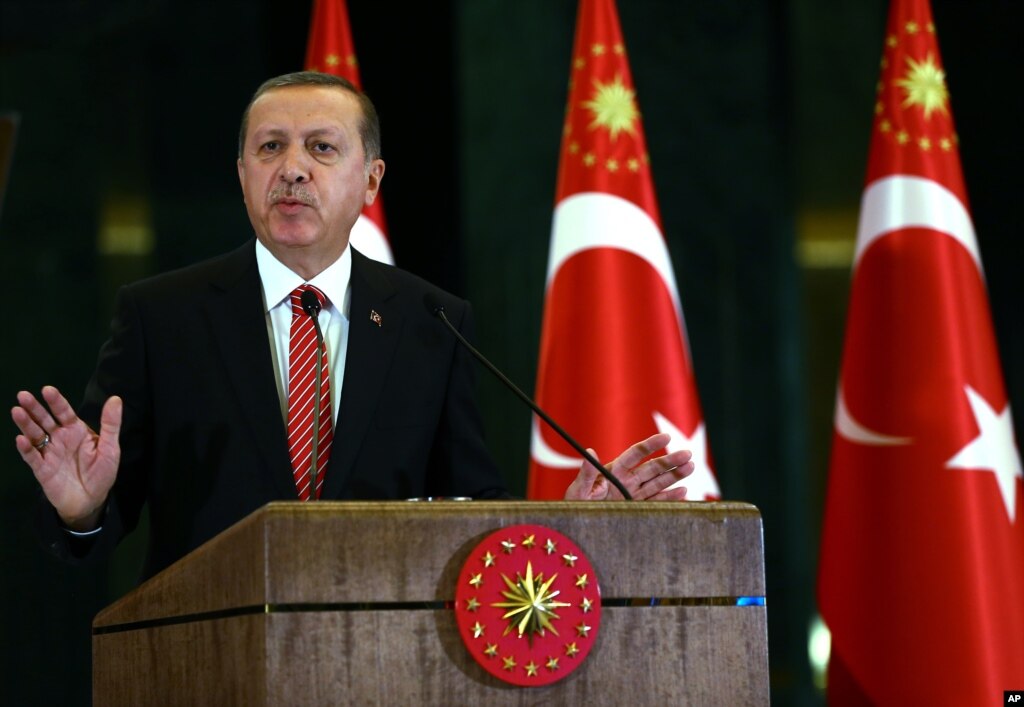
Turkish President Recep Tayyip Erdogan addresses local administrators at his palace in Ankara, Turkey, Nov. 26, 2015.
VOA News
Tensions remained heated between Ankara and Moscow Thursday following Turkey's shooting down of a Russian warplane near the Turkey-Syria border earlier in the week.
In an interview with CNN, Turkish President Recep Tayyip Erdogan said his country would not apologize for downing the jet.
"I think if there is a party that needs to apologize, it is not us," Erdogan said. "Those who violated our airspace are the ones who need to apologize."
The Turkish leader sounded somewhat more concilatory in another interview Thursday, telling France 24 television: "Had we known it was a Russian plane, we may have acted differently. But our pilots know the rules of engagement and have to do their duty to protect Turkish airspace."
'Need to talk'
Erdogan added that he and Russian President Vladimir Putin “need to talk about what happened," but said the Russian leader "has not answered my calls."
Russian President addresses newly arrived foreign ambassadors of 15 countries during receiving credentials ceremony in Moscow's Kremlin, Russia, Nov. 26, 2015.
Earlier Thursday, Putin called the shoot-down "totally inexplicable treacherous stabs in the back from those we believed to be our partners and allies in the fight against terror."
He again insisted that the plane was shot down in Syrian airspace, calling the incident "against common sense and international law."
"We received no comprehensive apology from Turkey's highest political level, no offer of compensation for the harm and damage, and no promise to punish the culprits of this crime," Putin said. "One gets the impression that the Turkish government is consciously driving Russian-Turkish relations to a deadlock. We regret that."
'Stab in the back'
Immediately after the plane was shot down Tuesday, Putin called the incident a “stab in the back by the accomplices of terrorists" that would have "serious consequences."

Wednesday, November 25, 2015

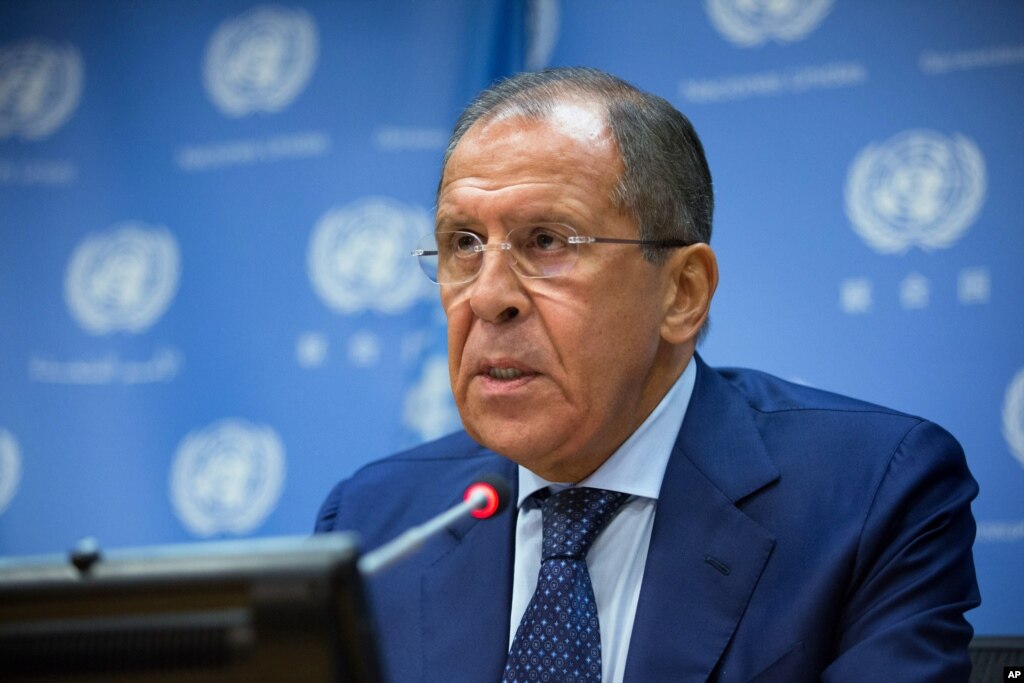
Lavrov: Turkey Downing Jet 'Planned Provocation' but Not Going to War

News / Middle East

Lavrov: Turkey Downing Jet 'Planned Provocation' but Not Going to War.    VOA NEWS

FILE - Russian Foreign Minister Sergei Lavrov speaks at United Nations headquarters, Oct. 1, 2015. On Wednesday, Lavrov said Turkey's downing of a Russian fighter jet will change the countries' relationship.
VOA News
Russian Foreign Minister Sergei Lavrov said Wednesday that Turkey's downing of a Russian warplane "looks like a planned provocation," but that Russia is not going to war with Turkey.
Lavrov said the incident will make Russia reconsider its relationship with Turkey. He canceled a planned trip to Turkey on Wednesday, but spoke with Turkey's foreign minister and the two agreed to meet in the coming days.
Turkish Prime Minister Ahmet Davutoglu told lawmakers Turkey has no intention of straining ties with its "friend and neighbor" Russia.
President Recep Tayyip Erdogan said that his country was simply defending its security when Turkish fighter planes shot down a Russian jet, and that he does not want any escalation with Russia.
Turkish President Recep Tayyip Erdogan speaks during a meeting at the presidential palace in Ankara, Turkey, Nov. 24, 2015.
Speaking at an event in Istanbul, Erdogan said the plane crashed in Syria but was still inside Turkey's airspace when it was hit Tuesday.
Other Turkish officials said that the plane was as deep as 2 kilometers over the border for about 17 seconds, and that its forces issued 10 warnings that were ignored before they fired.
Russia insists the plane never left Syrian territory.
US comment
A U.S. official told Reuters on the condition of anonymity that the U.S. believes the plane returned to Syrian airspace before being hit, while diplomats speaking to The New York Times said the plane crossed back into Syria after being hit.
Russian Prime Minister Dmitry Medvedev said Wednesday "dangerous escalation" in relations between Russia and NATO cannot be excused, even in the case of border protection.
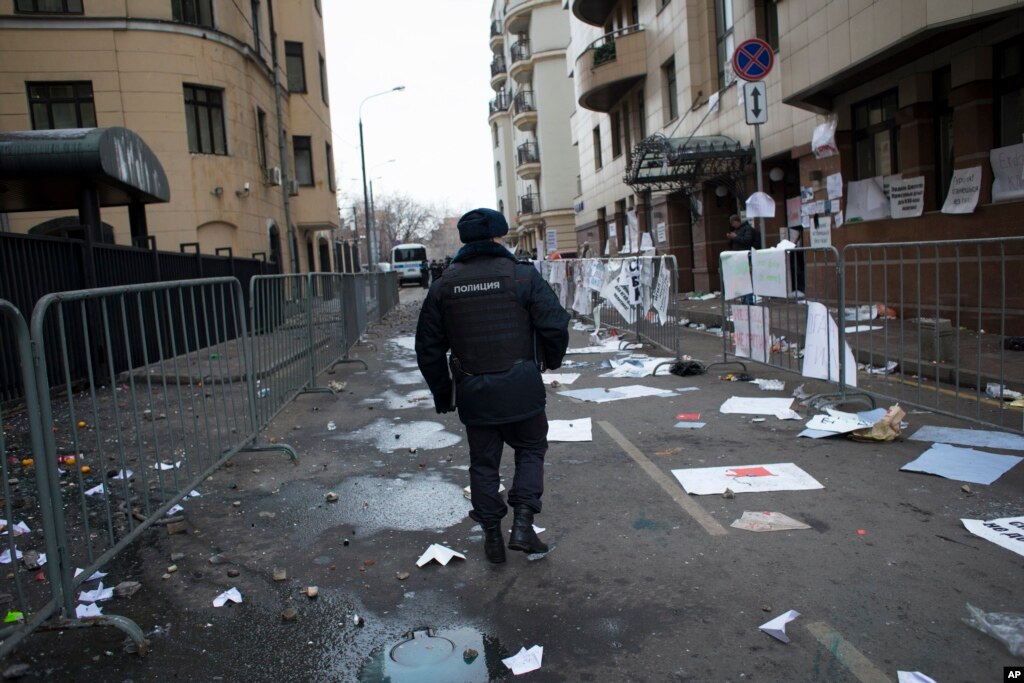
A policeman walks past the Turkish Embassy with broken window planes in Moscow, Russia, Nov. 25, 2015.
​President Vladimir Putin called the incident a "stab in the back" and accused Turkey of supporting terrorists.
Russia has announced several responses. Defense Minister Sergei Shoigu said Wednesday the military will send its advanced S-400 missile system to Syria's Latakia province, which borders Turkey. It is also deploying the guided-missile cruiser Moskva to the area.
Meanwhile, one of the pilots who parachuted from the plane arrived Wednesday at a Russian base in Latakia after being rescued by members of the Syrian army.
Alexander Orlov, Russia's ambassador to France, said the second pilot in the plane was "killed in a savage way."
A rescue helicopter sent to the crash site was shot down by rebels, killing one person on board.
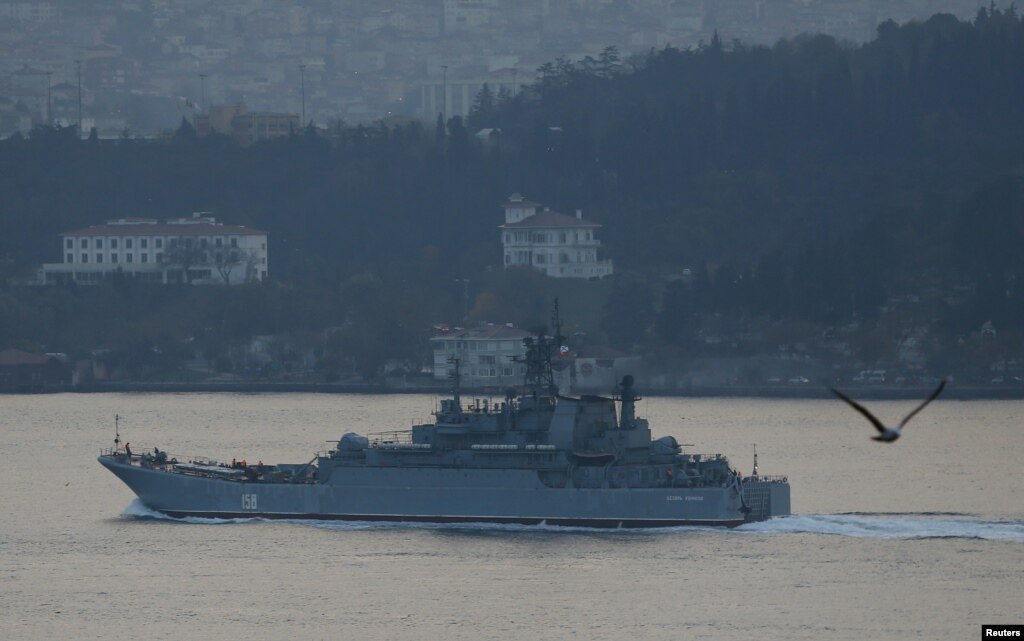
The Russian Navy's large landing ship Caesar Kunikov sets sail in the Bosphorus towards the Black Sea, in Istanbul, Turkey, Nov. 25, 2015.
​Erdogan and U.S. President Barack Obama spoke by phone Tuesday and agreed on the need to de-escalate tensions and prevent further incidents.
'Ongoing problem'
The White House said in a statement the leaders voiced their commitment to developing a transitional political process for peace in Syria, and international support for defeating Islamic State extremists.
The statement also reiterated U.S. support for Turkey's right to defend its airspace.
Earlier Tuesday, Obama, speaking in Washington, cited the downing of a Russian fighter jet as evidence of an "ongoing problem" with Russia's military operations in Syria.
Speaking alongside French President Francois Hollande at the White House, Obama said U.S. authorities were still collecting details of the shootdown, while noting that Russian military aircraft have been targeting moderate Syrian opposition groups very close to Turkey's borders. 
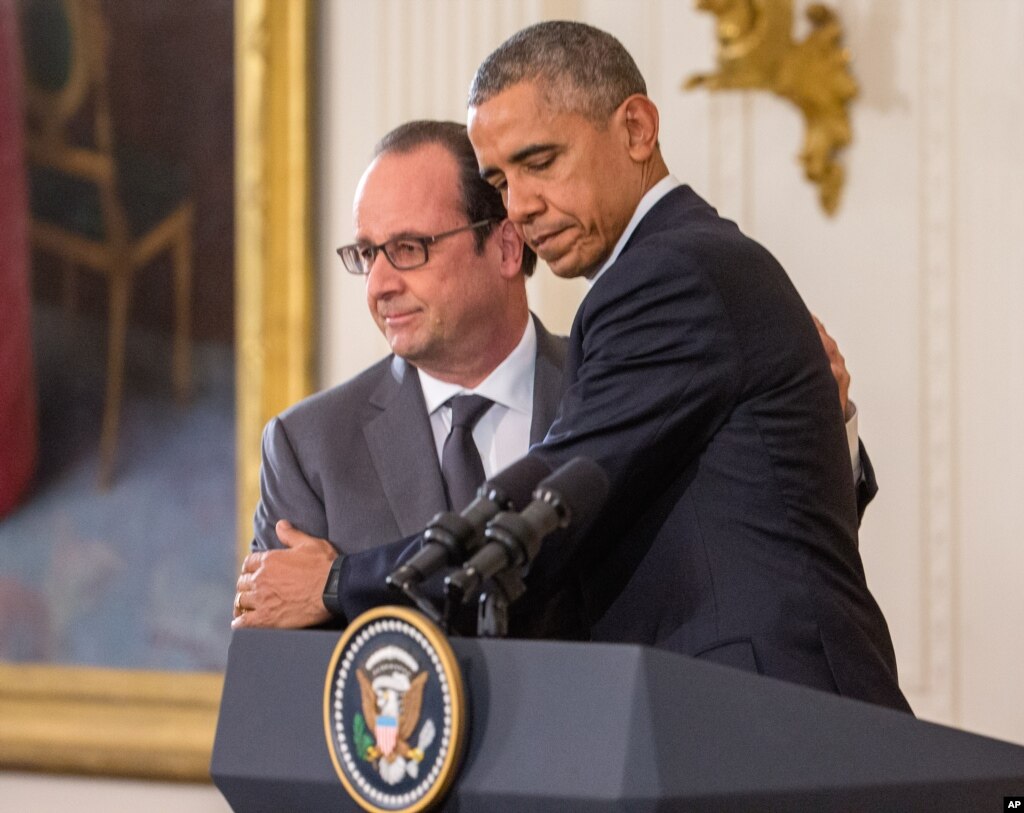
President Barack Obama and French President Francois Hollande embrace during a joint news conference in the East Room of the White House in Washington, Nov. 24, 2015.
He also said the incident shows a need to move quickly toward a diplomatic resolution of the Syrian conflict.
NATO meeting
The shootdown triggered an emergency NATO meeting in Brussels.  Afterward, NATO Secretary-General Anders Fogh Rasmussen said the 28-nation grouping supports the territorial integrity of Turkey, calling the member country "our NATO ally."
Turkish officials have issued multiple warnings about aircraft violating its airspace during Syria's 4½-year civil war.
Its forces shot down a Syrian helicopter in 2013 and last month took down an unidentified drone that crossed into its territory. Turkey also has complained about at least two instances of Russian jets flying in its airspace.
After the earlier Russian incursions into Turkey, the United States deployed six F-15 jets from Britain to Turkey's Incirlik Air Base to help the NATO ally secure its skies.