Friday, August 3, 2012


Οικονομία

Oι αγορές γίνονται πιο ασφαλείς

Αλλάζουν οι κανόνες για τις αγορές στο διαδίκτυο. Η Γερμανία υιοθετεί ευρωπαϊκή οδηγία που προβλέπει την ύπαρξη ενός ειδικού πλήκτρου, στο οποίο θα αναγράφεται ξεκάθαρα «αγορά» ή «υποχρεωτική αγορά».
5 εκατομμύρια χρήστες του διαδικτύου υπολογίζεται ότι έχουν πέσει στη Γερμανία θύματα κατά τη διάρκεια αγοράς ή παραγγελίας κάποιου προϊόντος στο ίντερνετ επειδή επέλεξαν πλήκτρα στα οποία αναγραφόταν η λέξη free. Αποτέλεσμα; Αγόρασαν κάτι που είχαν πιστέψει ότι ήταν δωρεάν, όπως συνταγές, ωροσκόπια, προγράμματα πλοήγησης ή τεστ νοημοσύνης. Βέβαια στους όρους χρήσης αναφερόταν ότι το προϊόν δεν είναι δωρεάν. Οι περισσότεροι χρήστες δεν μπαίνουν ωστόσο στον κόπο να τους διαβάσουν.

Η γερμανική κυβέρνηση αποφάσισε να ενισχύσει τα δικαιώματα των χρηστών και έτσι από 1ης Αυγούστου όλες οι ιστοσελίδες πώλησης στη Γερμανία -ακόμα και εκείνες που απευθύνονται στη γερμανική αγορά- είναι υποχρεωμένες να έχουν ένα ειδικό πλήκτρο, στο οποίο να αναγράφεται «αγορά» ή «υποχρεωτική αγορά» και όχι «επόμενο βήμα» ή «αποστολή παραγγελίας».

Ο νόμος δεν ισχύει μόνο για τις γερμανικές ιστοσελίδες

Το προειδοποιητικό πλήκτρο υποχρεωτικό για τις ιστοσελίδες που δραστηριοποιούνται στη Γερμανία
Ο νόμος δίνει διορία 3 μηνών στις εταιρίες πώλησης στο διαδίκτυο να εντάξουν το «προειδοποιητικό πλήκτρο», που θα κάνει πιο διαφανείς τις αγορές στο ίντερνετ στις ιστοσελίδες τους. Για τις γερμανικές σελίδες το πλαίσιο είναι ξεκάθαρο. Το τι ισχύει για εκείνες που έχουν έδρα στο εξωτερικό, εξηγεί η Γιούτα Γκούρκμαν από το Σύνδεσμο Υπηρεσιών Προστασίας Καταναλωτή:

«Αν ένα Online Shop από το εξωτερικό απευθύνεται και στη γερμανική αγορά έχοντας ως γλώσσα επιλογής τα γερμανικά ή παρέχει τη δυνατότητα κλήσεων από τη Γερμανία, τότε για τον καταναλωτή ισχύει το γερμανικό δίκαιο και συνεπώς είναι υποχρεωτική η ύπαρξη ενός προειδοποιητικού πλήκτρου».

Οι αξιολογήσεις άλλων χρηστών είναι καλός σύμβουλος

Το ερώτημα είναι αν μια ιστοσελίδα εμπνέει εμπιστοσύνη ή όχι
Παρά το νέο μέτρο, οι καταναλωτές πρέπει να είναι ιδιαίτερα προσεκτικοί, προειδοποιεί η Γιούτα Γκούργκμαν, διότι στο ίντερνετ υπάρχουν πολλοί κίνδυνοι. Όπως λέει χαρακτηριστικά, στα Online Shop υπάρχουν ακόμα πολλά «μαύρα πρόβατα» που εξαπατούν τους πελάτες:

«Φοβάμαι ότι κάποιες σελίδες θα εξακολουθήσουν να προσπαθούν με χίλιους τρόπους να βγάλουν χρήματα με ανήθικο τρόπο. Πρέπει να είμαστε συνεπώς ιδιαίτερα προσεκτικοί. Στο διαδίκτυο θα πρέπει κατ΄ αρχήν να προσέχεις από ποια ιστοσελίδα αγοράζεις».

Αν κάποιο ηλεκτρονικό κατάστημα είναι άγνωστο, είναι χρήσιμο να ρίχνει κανείς μια ματιά στις αξιολογήσεις, προτείνουν οι υπηρεσίες προστασίας του καταναλωτή. Συχνά υπάρχουν στο διαδίκτυο χρήσιμες πληροφορίες, με τη βοήθεια των οποίων ο καταναλωτής είναι σε θέση να διαπιστώσει αν το ηλεκτρονικό κατάστημα εμπνέει εμπιστοσύνη ή όχι, συμβουλεύει τους καταναλωτές ο Γερμανικός Σύνδεσμος Υπηρεσιών Προστασίας Καταναλωτών.

Oliver Neuroth / Στέφανος Γεωργακόπουλος
Υπεύθυνος σύνταξης: Άρης Καλτιριμτζής                                            dw de

Protesters clash with police in Kyiv. Photo by DW correspondent Alexandr Savitski 05.06.2012

UKRAINE

How Ukraine takes a page from Russia's book

Observers say Ukraine is becoming more and more like Russia - less democracy, more authoritarianism. President Viktor Yanukovych seems to be inspired by President Vladimir Putin - but the comparison only goes so far.
This Sunday (05.08.2012), Yulia Tymoshenko will have spent one year in jail. That was when the former Ukrainian prime minister was arrested, before she was later sentenced to seven years in jail following a controversial trial. The Ukrainian judiciary convicted her of abuse of office for signing gas contracts with Russia.
But the criticism from abroad did not seem to impress the leadership in Kyiv. Tymoshenko is currently facing another trial, this time on charges of tax evasion. Other members of her government, such as former Interior Minister Yuriy Lutsenko, are also in prison.
Turning Russian
It's a scenario that might remind one of Russia, where Mikhail Khodorkovsky, former oil magnate and critic of President Vladimir Putin's regime, has been languishing in prison for nine years, convicted of business-related crimes.
Former Ukrainian Prime Minister Yulia Tymoshenko shows what she claims is an injury in the Kachanivska prison in Kharkiv,
The Tymoshenko case has been condemned in the west
Western observers consider the trial against Khodorkovsky politically motivated, a charge that that Moscow denies. The Tymoshenko case is also often used by Western media as an example of how Ukraine has become more like Russia since President Viktor Yanukovych's came back into office two and a half years ago.
Gerhard Simon, a political scientist specializing in Eastern Europe at the University of Cologne, said, "The purpose of the current leadership is to ensure they will never have to give up power."
As in Russia, Ukraine has a "party of power," explained Simon. That party attempts to dominate the political system at both the regional and national levels. Another parallel is Kyiv's desire to make "the opposition weak and controllable," Simon said.
"Russia has been setting the example for several years, and Ukraine is on exactly the same path," he added.
Companions from Donetsk
The comparisons do not end with the political system. When former KGB agent Putin became president of Russia in 2000, he made sure to put former or active secret service agents from his hometown of St. Petersburg at the head of key departments. Yanukovych has done the same, filling key positions with people from his hometown of Donetsk. Half of the Ukrainian government, including the prime minister, has worked in Donetsk at some point.
Ukrainian President Viktor Yanukovych attends his inauguration in Ukrainian parliament in Kyiv
Ukraine has become more draconian under Yanukovych
The Ukrainian legislature has also apparently taken a few cues from Russia. The Russian parliament recently introduced a new law imposing more severe punishments for defamation, an act that garnered much condemnation from human rights groups. A similar bill is about go before the Ukrainian parliament.
More differences than similarities
But despite these parallels, Andreas Umland, a political scientist at the National University of Kyiv-MohylaAcademy, said there are many more differences. "There are attempts to create vertical power, to control parliament, to strengthen the president's power, to intimidate or silence political opponents," Umland said, but unlike Russia, Ukraine does not have optimal conditions for such a system.
"There is no money, no wide support from the people, no uniform elite, and no uniform apparatus that stands behind the president, as there is in Russia," said Umland, who said he considers "Ukraine's semi-authoritarian regime more unstable" than its Russian counterpart.
Ukrainian journalist Vitaliy Portnikov also said he thinks the conditions in Ukraine are very different from those in Russia. He said Russia has introduced an "oligarchic model" since the fall of the Soviet Union. "Different groups of oligarchs and officials essentially agree amongst themselves," said Portnikov, editor-in-chief of Ukrainian broadcaster TVi.
A Ukrainian woman passes in front of the voting boxes at a polling station in Kyiv, in February 2010
Observers have held Ukraine's elections to be generally fair - that may chance in October, some say
He added that Ukraine did have a similar system, but Yanukovych altered it. "Yanukovych makes decisions on his own," Portnikov, who worked for many years in Moscow, told DW. "But Putin doesn't."
Danger of further loss of democracy
Portnikov added that press freedoms in Ukraine could also be limited soon. He said TVi has been put under more and more pressure since Yanukovych's tenure began. The broadcaster's general director was being investigated for tax fraud, though that case has been suspended for now.
Upcoming parliamentary elections at the end of October could bring the situation in Ukraine closer to that of Russia. Since the Orange Revolution in 2004, all Ukrainian elections have been considered democratic by Western observers. But there could be a serious step backwards this time. "I'm expecting total election fraud," Portnikov said.     dw de

Thursday, August 2, 2012


Gazprom becomes world's most profitable company

Headquarters of Russian gas giant Gazprom in Moscow. | EPA/SERGEI CHIRIKOV
Taking advantage of prices on world raw materials market, Russian gas monopoly Gazprom, which netted $44.46bn in profits last year, overtook US-based energy major ExxonMobil, which generated $41.6bn in 2011, to become the world's most profitable company, according to the latest edition of Forbes magazine. ExxonMobil was the world's most profitable company in 2010.
Gazprom Chief Executive Alexei Miller told the company's annual meeting of shareholders in June that his company was the world's leader in revenue for the second consecutive year and was second in output among all global oil and gas companies. Gazprom has a monopoly on the development and transportation of Russia’s large natural gas deposits.  (KG)

OIKONOMIA


Οικονομία

Αντιδράσεις στις δηλώσεις Ντράγκι για αγορά ομολόγων

Λίγο μετά τις δηλώσεις του προέδρου της ΕΚΤ Μάριο Ντράγκι τα ευρωπαϊκά χρηματιστήρια σημείωσαν πτώση. Το SPD κατηγορεί την καγκελάριο Μέρκελ ότι δεν αφήνει περιθώρια στην ΕΚΤ.
Διπλωματικός στους τόνους, αλλά επί της ουσίας αποφασισμένος να παρέμβει για την αγορά κρατικών ομολόγων φαίνεται ο επικεφαλής της Ευρωπαϊκής Κεντρικής Τράπεζας Μάριο Ντράγκι. Σε συνέντευξη τύπου μετά την τακτική συνεδρίαση του Δ.Σ. της Ε.Κ.Τ. ο Ντράγκι επεσήμανε ότι η Φραγκφούρτη θα μπορούσε να λάβει "μέτρα εξαιρετικού χαρακτήρα", καθώς και "επιχειρησιακό ρόλο" στις αγορές, στον βαθμό που αυτό κρίνεται απαραίτητο για τη θωράκιση του ευρώ.
Ο πρόεδρος της Ε.Κ.Τ. τόνισε ότι τα μέτρα θα εξειδικευθούν "τις επόμενες εβδομάδες". Όσον αφορά τη γενικότερη μακροοικονομική κατάσταση στην ευρωζώνη, ο Μάριο Ντράγκι δήλωσε ότι ο πληθωρισμός αναμένεται να πέσει κάτω από το 2% το 2013, ενώ η οικονομική ανάπτυξη παρουσιάζει περαιτέρω τάσεις επιβράδυνσης. Με αυτά τα λόγια ο πρόεδρος της Ε.Κ.Τ. περιγράφει ένα μακροοικονομικό πλαίσιο που φαίνεται να ευνοεί μελλοντική παρέμβαση της Φραγκφούρτης στην αγορά ομολόγων, καθησυχάζοντας παράλληλα τους φόβους για ενδεχόμενες πληθωριστικές πιέσεις.
Ήδη από την Τετάρτη η εφημερίδα Süddeutsche Zeitung του Μονάχου, επικαλούμενη πηγές της τράπεζας, έκανε λόγο για "διπλή παρέμβαση" της Ε.Κ.Τ. και του μελλοντικού Ευρωπαϊκού Μηχανισμού Διάσωσης για την αγορά ομολόγων τόσο από τις ευρωπαϊκές κυβερνήσεις όσο και από τη δευτερογενή αγορά, με στόχο την αποκλιμάκωση των επιτοκίων δανεισμού σε κράτη-μέλη της ευρωζώνης που αντιμετωπίζουν προβλήματα χρέους. Η εφημερίδα σημείωνε πάντως ότι οι όποιες αποφάσεις θα ανακοινωθούν πιθανότατα μετά την απόφαση του Ομοσπονδιακού Συνταγματικού Δικαστηρίου της Γερμανίας στις 12 Σεπτεμβρίου για τον υπό διαμόρφωση Ευρωπαϊκό Μηχανισμό Διάσωσης.
Δεν δικαιώθηκαν οι μεγάλες προσδοκίες
Πάντως ο Μάριο Ντράγκι απέρριψε το γαλλοιταλικό αίτημα να δοθούν αρμοδιότητες τράπεζας στον Μηχανισμό Διάσωσης, ώστε να δανείζεται ρευστό απευθείας από την Ε.Κ.Τ. για να αγοράζει απεριόριστο αριθμό ομολόγων από τα υπερχρεωμένα κράτη-μέλη της ευρωζώνης.
Κατά τα λοιπά, η Ε.Κ.Τ. ανακοίνωσε, όπως αναμενόταν, ότι το βασικό επιτόκιο θα παραμείνει στο ιστορικό χαμηλό του 0,75%. Αναλυτές επισημαίνουν πάντως ότι η μείωση επιτοκίου παραμένει "όπλο στη φαρέτρα" της Φραγκφούρτης και δεν αποκλείεται να ενεργοποιηθεί το φθινόπωρο.
Μετά τις δηλώσεις Ντράγκι άρχισε να καταγράφεται πτώση στην ισοτιμία του ευρώ και στα χρηματιστήρια, που φαίνεται ότι περίμεναν πιο άμεσες παρεμβάσεις. Το γερμανικό υπουργείο Οικονομικών δεν θέλησε να σχολιάσει την τοποθέτηση του επικεφαλής της Ε.Κ.Τ. Οι γερμανοί σοσιαλδημοκράτες προειδοποίησαν ότι η αγορά ομολόγων χωρών που βρίσκονται σε κρίση, θα ήταν μια λανθασμένη κίνηση, που δεν θα έκανε τίποτε άλλο, παρά να "αγοράσει χρόνο".
Πάντως ο οικονομολόγος και σύμβουλος της καγκελαρίου Πέτερ Μπόφινγκερ δήλωσε πως δεν κατανοεί τις επιφυλάξεις για την αγορά ομολόγων και ανέφερε το παράδειγμα της γερμανικής κεντρικής τράπεζας, η οποία το 1975, σε περίοδο μεγάλης ύφεσης, ξόδεψε δισεκατομμύρια μάρκα αγοράζοντας ομόλογα με στόχο να μειώσει τα επιτόκια.

RTRD / DPA/ Γιάννης Παπαδημητρίου                               DW DE
Υπεύθ.σύνταξης: Σπύρος Μοσκόβου

A handout image from NASA TV released 10 February 2010, shows a Russian Progress resupply vehicle, docked to the International Space Station, is featured in this image photographed by an STS-130 crew member on the space shuttle Endeavour during rendezvous and docking operations. EPA/NASA T.V./HANDOUT BEST QUALITY FROM NASA TV EDITORIAL USE ONLY/NO SALES

SPACE

Russia tests new space route and sets record time

A Russian spacecraft has slashed the usual time taken to reach the International Space Station. The achievement has set a new record and standard for future missions.
Six hours was all it took for the ISS to welcome its newest guest, fresh from its Earthly takeoff.
Using a new approach maneuver, the unmanned Russian spacecraft Progress docked at the ISS slightly ahead of schedule.
The reason for its speedy ascent was that it took only four orbits to reach the ISS, located around 350 kilometers (220 miles) above the earth, instead of the usual 34.
That trip usually takes around two days, so astronauts are hopeful this new approach can be used in future manned Soyuz capsules, cutting costs and time.
Hopes for the future
"If you can get the crew to orbit in six hours and onboard the International Space Station, that could be a tremendous benefit over the two-plus days it takes today," Dan Harman, NASA's space station manager of operations and integration, told reporters last week.
If the maneuver is used in manned missions, it could mean astronauts spend less time in cramped discomfort reaching their destination, ultimately giving them more research time at the ISS.

Earth to the ISS in six hours.

Mission control spokeswoman Natalia Biketova has been quoted by the AFP news agency as saying the procedure was still in the test phase, which is why a cargo ship had been used in this case.
The ISS is currently hosting two other cargo vessels, and it is being manned by three Russian cosmonauts, two US astronauts and a Japanese astronaut.
The news is also encouraging for Russia's space program, which over the past year has lost half a dozen satellites and a Progress cargo vessel bound for the ISS.
jr/rg (dpa/AFP)                                                                        dw de

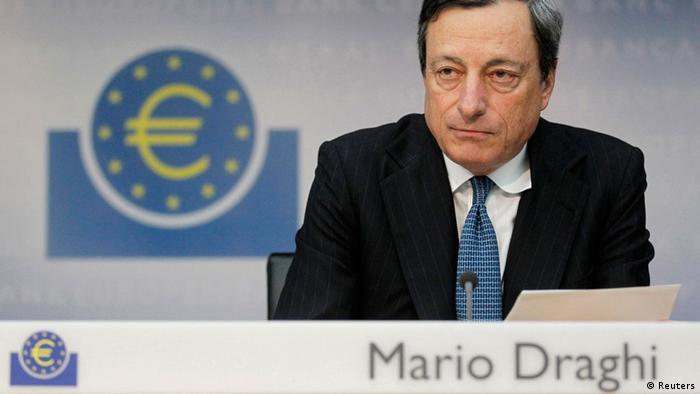
Draghi at the press conference

FINANCE

Draghi can't offer a quick solution

The expectations were enormous ahead of the European Central Bank's monthly meeting. People were talking about "unlimited firepower" and "whatever it takes." But the announcements at the end were disappointing.
Not many people were very interested in the fact that the European Central Bank (ECB) left its interest rates unchanged at its meeting on Thursday. Much more important was the question of what the bank was going to do about the high interest rates which some eurozone countries are currently having to pay to borrow money. The ECB president, Mario Draghi, had raised expectations last week when he said that the ECB would do "whatever it takes" to save the euro, "and believe me, it will be enough."
Those were clear words which indicated decisiveness - very different from the usual careful phrases for which central bank presidents are better known. But they left plenty of room for speculation, and so the markets and the media could let their imaginations rip.
Dreams of salvation
One view was that the ECB would start buying bonds itself. But since its statutes don't allow it to lend money directly to states, the idea emerged that the future ESM rescue fund would take over that role. It would get a license to operate as a bank and would have endless credit rights with the ECB, so that it could buy bonds from troubled states. That way it would be possible to reduce the high interest on Spanish or Italian bonds to a bearable level.
That's what the heated imagination of the markets and the media was saying, and it could be that Draghi's imagination was running on the same lines. But on Thursday, reality struck and he had to talk like a normal central banker again. He delivered a sober statement, in coded language, that was disappointingly vague: "The Governing Council, within its mandate to maintain price stability over the medium term and in observance of its independence in determining monetary policy, may undertake outright open market operations of a size adequate to reach its objective."
In other words, the ECB could possibly buy bonds which were on the market. Whether it will do so, Draghi didn't say. The policy is highly controversial. But the ECB has already bought bonds in the past in a program which saw purchases worth some 200 billion euros. That program was suspended in spring.
German resistance
The German representative on the Governing Council of the ECB, Bundesbank president Jens Weidmann, is strictly opposed to such purchases. He argues that the EU treaties do not allow the ECB to finance states through the back door in this way. In addition he fears that pouring so much money into the market would run the risk of boosting inflation. And the prevention of inflation is the ECB's primary task.
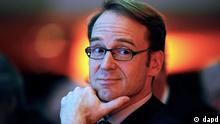
Weidmann
Weidmann is the main opponent of an interventionist ECB strategy
Draghi didn't hide the fact that the Germans don't like the idea of buying bonds, but he emphasized several times that he couldn't see any risk of inflation in the foreseeable future. His vague announcement that the bank "may" become active, looks like the compromise on which the bank's council was able to agree.
Draghi has no power to deliver on the other elements in the dream: the bank license for the ESM or its right to buy bonds. So he was only able to appeal to the politicians. "Governments must stand ready to activate the ESM/EFSF in the bond market when exceptional financial market circumstances and risks to financial stability exist," he said, adding that this should only be under strict conditions.
It's up to the governments
One could interpret his words to mean that he too favors a dual strategy from the ECB and the rescue funds. But that won't be decided by the ECB, it will be up to the governments. The German Constitutional Court will also have a say in the matter. On September 12, it's due to announce its decision as to whether the ESM is in accordance with the German constitution. Until then, the fund can't start its operations.
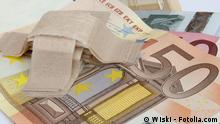
banknotes and sticking plaster
Nobody has yet been able to offer a cure for the crisis
Even if the German government and the German court both agree and give a green light for the ESM, there will still be plenty to do before the fantasies of an ESM with limitless firepower come true. In theory, the ESM, equipped with a bank license, would buy bonds from troubled states, sell them to the ECB and get money with which it could then intervene further. The idea behind the scheme is: if nobody is prepared to lend money to Italy and Spain at sensible rates, then we'll do it ourselves. And we'll do it in such a big way that speculators won't find it worth their while to try to bet against it.
Draghi seems to think that's fine. But here too there is a big gap between fantasy and reality. It's not the ECB but the national governments which have to award the license. The ECB will then have to decide if it wants to accept the rescue fund as a partner and give it credits. Draghi admitted that the ECB has already commissioned a legal report which says that the current structure of the ESM would make it impossible for the ECB to lend it money.
So the big dream of a quick solution to the debt crisis has been followed by the shock of waking up - the dream was never realistic. But the idea of a strategy involving bond purchases by the ESM and the ECB working together is likely to be a topic of discussion and dispute for some time to come.                                         dw de

Annan guits......


U.N. Syria peace envoy Kofi Annan speaks to the media at a hotel after returning from a meeting with Syrian President Bashar al-Assad in Damascus July 9, 2012. REUTERS/Khaled al-Hariri (SYRIA - Tags: POLITICS)

DIPLOMACY

Annan quits as UN-Arab League envoy to Syria

Former Secretary General Kofi Annan is quitting as the UN-Arab League envoy to Syria. UN chief Ban Ki-moon said Annan had decided not to seek an extension to the mandate first handed to him in February.
Announcing Annan's resignation at the UN in New York, Ban said the UN and the Arab league were in discussions on appointing a successor to Annan.
"Mr. Annan has informed me, and the secretary general of the League of Arab States, Mr. Nabil Elaraby, of his intention not to renew his mandate when it expires on 31 August 2012."
"I wish to express my deepest gratitude to Mr. Annan for the determined and courageous efforts he has made as the joint special envoy for Syria," Ban said.
"Kofi Annan deserves our profound admiration for the selfless way in which he has put his formidable skills and prestige to this most difficult and potentially thankless assignments," Ban said.
The UN and Arab League named Annan, a Nobel Peace Prize-winning former UN chief, as its envoy on the Syria conflict on February 23. Syria's President Bashar Assad agreed a six-point peace plan with Annan but never carried it out.
Annan cites UN 'division'
Speaking in Geneva, Annan said "persistent division" within the UN Security Council had become an "obstacle to diplomacy" and said the plan commonly attributed to him was, in fact, a Security Council initiative.

Annan resigns, condemns "divisions"

'"At a time when the Syrian people desperately need action, there continues to be finger pointing and name calling in the Security Council," Annan said. "As an envoy, I can't want peace more than the protagonists."
Russia, which together with China, has vetoed past UN Security Council draft resolutions on Syria, said it regretted Annan's decision.
"We understand that that's his decision; we regret that he chose to do so," Ambassador Vitaly Churkin told reporters at the UN. Churkin insisted that Russia had always supported the envoy "very strongly."
UN draft toned down
Annan's move precedes a UN General Assembly vote due on Friday on an Arab-drafted resolution that initially called on Assad to stand down as fighting continues unabated across Syria. The latest draft has been toned down by removing the explicit call that Assad resign and that sanctions be supported.

Fighting unabated

On Thursday, Syrian rebels shelled a military air base expected to be used by regime forces to bombard the northern city of Aleppo. Meanwhile, Syrian troops have reportedly killed dozens of people in a raid on Damascus.
Syrian activists say more than 20,000 people have died since the uprising against Assad started in March 2011.
An assessment released by UN food and agriculture agencies based in Rome says 3 million Syrians affected by the fighting need food, crop and livestock assistance.
Farmers had been forced to abandon farming and leave crops, the report says, and rural families lack remittances because migrant relatives are no longer travelling to Lebanon and Saudi Arabia to earn money.
ipj/ng (AP, dpa, AFP, Reuters)