Friday, March 11, 2016

Μέρκελ: Ζητούμενο η δίκαιη κατανομή των βαρών

Πολιτική

Μέρκελ: Ζητούμενο η δίκαιη κατανομή των βαρών

Το κλείσιμο της Βαλκανικής Οδού επέκρινε η Άγκελα Μέρελ ενόψει των τοπικών εκλογών, υπογραμμίζοντας εκ νέου ότι η Ελλάδα δεν πρέπει να αφεθεί μόνη της. Μάχη για κάθε ψήφο δίνει το CDU εκτιμά η Süddeutsche Zeitung.
«Το ντε φάκτο κλείσιμο των συνόρων δεν αποτελεί συνολική λύση του προβλήματος τόνισε η Άγκελα Μέρκελ σε προεκλογική της ομιλία στο Μπαντ Νόιναρ-Άρβαϊλερ», γράφει στο σημερινό της φύλλο η εφημερίδα Süddeutsche Zeitung. Παρά το γεγονός ότι οι Χριστιανοδημοκράτες δίνουν μάχη για κάθε ψήφο στις εκλογές της Κυριακής στο κρατίδιο Ρηνανίας-Παλατινάτου και θα μπορούσαν να εκμεταλλευθούν προς όφελός τους τη μείωση των προσφυγικών ροών προς τη Γερμανία, η γερμανίδα καγκελάριος επέκρινε για μια ακόμα φορά δημόσια το κλείσιμο των συνόρων στα Βαλκάνια, τονίζοντας: «Βεβαίως οι πρόσφυγες που έρχονται στην Γερμανία είναι πλέον λιγότεροι. Κάθε βράδυ όμως βλέπουμε στην τηλεόραση τους πρόσφυγες στα σύνορα ΠΓΔΜ και Ελλάδας. Μακροπρόθεσμα αυτό δεν θα βγει σε καλό». Αναφερόμενη στη δύσκολη θέση, στην οποία βρίσκεται η Ελλάδα λόγω της προσφυγικής κρίσης η Άγκελα Μέρκελ υπογράμμισε στην ομιλία της: «Δεν μπορεί να γινόμαστε αρεστοί σε 27 χώρες και να αφήνουμε μια χώρα μόνη με το πρόβλημα. Το ζητούμενο είναι μια δίκαιη κατανομή των βαρών σε ευρωπαϊκό επίπεδο».
Παράδειγμα προς αποφυγή για τους πρόσφυγες η Ειδομένη;
Η Άγκελα Μέρκελ δεν συμμερίζεται την άποψη που βλεπει την Ειδομένη ως παράδειγμα προς αποφυγή
Η γερμανική εφημερίδα επισημαίνει στο άρθρο της ότι στο Βερολίνο, ακόμα και εντός του κυβερνητικού συνασπισμού, υπάρχουν δύο τρόποι ανάγνωσης όσων συμβαίνουν στην Ειδομένη. Ο πρώτος αποδίδει στην Αθήνα την κύρια ευθύνη της κατάστασης διότι η ελληνική κυβέρνηση καθυστέρησε για αρκετούς μήνες την δημιουργία κατάλληλης υποδομής για πρόσφυγες, όπως είχε αποφασιστεί από την ΕΕ. Ο δεύτερος θεωρεί ότι η Ειδομένη αποτελεί στην ουσία παράδειγμα προς αποφυγή για πρόσφυγες που επιδιώκουν να έρθουν στην Ευρώπη.
Όμως η Άγκελα Μέρκελ δεν συμμερίζεται την άποψη αυτή, συνεχίζει η εφημερίδα του Μονάχου. Τασσόταν πάντα κατά του σφραγίσματος της Βαλκανικής Οδού για να μην μείνει η Ελλάδα μόνη της με το πρόβλημα. Πιστεύει επίσης ότι τόσο η Γερμανία, όσο και η Αυστρία θα αντιμετώπιζαν τις προσφυγικές ροές καλύτερα από ό,τι η Ελλάδα. Υπολογίζεται ότι με ανοιχτά τα βαλκανικά σύνορα η Γερμανία θα δεχόταν κατά μέσο όρο 1.000 – 2.000 πρσφυγες την μέρα. Κάτι όχι εύκολο, αλλά διαχειρίσιμο, εκτιμάται στο Βερολίνο.
Εγκατάσταση Σύρων προσφύγων σε Τουρκία, Ιορδανία, Λίβανο
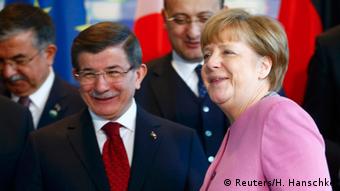
Ζητούμενο για την καγκελάριο η συνεργασία με την Τουρκία στο προσφυγικό
Οι επικριτές της προσφυγικής πολιτικής της καγκελαρίου ισχυρίζονται ότι είναι αδιάφορο το που αναχαιτίζονται οι προσφυγικές ροές, στην Τουρκία ή την Ελλάδα. Η Αγκελα Μέρκελ έχει ωστόσο διαφορετική άποψη. Θεωρεί προτιμότερη μια συμφωνία με την Άγκυρα, μιας και η Τουρκία αντιμετωπίζει όλο και μεγαλύτερα προβλήματα τόσο λόγω των προσφυγικών ροών, όσο και των δομών που δημιουργούν στη χώρα οι διακινητές. Οι επιπτώσεις, από αυτή την εξέλιξη, για την Ευρώπη, δεν είναι εύκολα να ελεγχθούν. Για το λόγο αυτό η καγκελάριος προκρίνει την συνεργασία και στήριξη της Τουρκίας.
Σχεδόν από την αρχή της προσφυγικής κρίσης η Άγκελα Μέρκελ τάχθηκε υπέρ της παραμονής κυρίως Σύρων προσφύγων σε χώρες κοντά στην πατρίδα τους υπό αξιοπρεπείς συνθήκες. Με άλλα λόγια προτείνει να στηριχθούν οικονομικά η Τουρκία, η Ιορδανία και ο Λίβανος που φιλοξενούν ήδη σήμερα εκατοντάδες χιλιάδες πρόσφυγες από τη Συρία. Η γερμανίδα καγκελάριος επιδιώκει με τον τρόπο αυτό από τη μια πλευρά να αποτρέψει τους πρόσφυγες από το επικίνδυνο ταξίδι προς την δυτική Ευρώπη και από την άλλη να καταπολεμήσει τα δίκτυα διακινητών, καταλήγει η Süddeutsche Zeitung.
Süddeutsche Zeitung / Στέφανος Γεωργακόπουλος

Πολιτικές αναταράξεις ενόψει των τοπικών εκλογών

Πολιτική

Πολιτικές αναταράξεις ενόψει των τοπικών εκλογών

Η πιθανή είσοδός του AfD σε τρία τοπικά κοινοβούλια προκαλεί προβληματισμό στην κεντρική πολιτική σκηνή της χώρας. Η Μέρκελ παραμένει δημοφιλής, παρά τις απώλειες που καταγράφουν δημοσκοπήσεις.
Η πιθανή είσοδος του ευρωσκεπτικιστικού και ξενοφοβικού κόμματος Εναλλακτική για τη Γερμανία (AfD) στα κοινοβούλια των τριών κρατιδίων που έχουν εκλογές την ερχόμενη Κυριακή αλλάζει το πολιτικό σκηνικό στη χώρα.
Σύμφωνα με τις δημοσκοπήσεις μόνο στο ανατολικογερμανικό κρατίδιο της Σαξονίας- Άνχαλτ ο κυβερνητικός συνασπισμός Χριστιανοδημοκρατών και Σοσιαλδημοκρατών θα καταφέρει να διατηρήσει την πλειοψηφία του. Αντίθετα, τόσο στη Ρηνανία- Παλατινάτο όσο και στη Βάδη-Βυρτεμβέργη επικρατεί αβεβαιότητα για το ποια κόμματα θα κυβερνήσουν στο μέλλον.
Iσχυρό χαρτί του CDU παραμένει η Μέρκελ
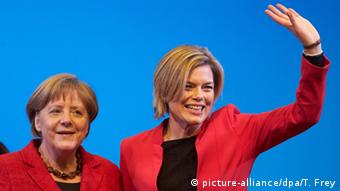
H Άγκελα Μέρκελ με την υποψήφια των Χριστιανοδημοκρατών στο κρατίδιο της Ρηνανίας Παλατινάτου Γιούλια Κλέκνερ
Παρά το γεγονός ότι το ποσοστό των αναποφάσιστων σε αυτά τα δύο τελευταία κρατίδια ξεπερνά το 50% των ψηφοφόρων θα πρέπει να αναμένεται πάντως πτώση στα ποσοστά των Χριστιανοδημοκρατών. Οι αιτίες σχετίζονται τόσο με ζητήματα που αφορούν τα ίδια τα κρατίδια και το τοπικό πολιτικό προσωπικό τους όσο και με το προσφυγικό πρόβλημα, το οποίο διαδραμάτισε κυρίαρχο ρόλο στον προεκλογικό αγώνα.
Παρά όμως τις αναμενόμενες απώλειες των Χριστιανοδημοκρατών, πολιτικοί αναλυτές εκτιμούν ότι η Άγκελα Μέρκελ και δεν κινδυνεύει να αμφισβητηθεί. Η καγκελάριος παραμένει το ισχυρό χαρτί του κόμματός της.
Τα ποσοστά της δημοτικότητάς της στις δημοσκοπήσεις ανεβαίνουν και πάλι. Και όχι μόνο. Και στα τρία κρατίδια οι περισσότεροι ψηφοφόροι είναι της άποψης ότι η γερμανίδα καγκελάριος κάνει καλή η σχετικά καλή δουλειά στο πεδίο του προσφυγικού: στη Σαξονία-Άνχαλτ το 47% των ερωτηθέντων, στη Βάδη Βυρτεμβέργη το 57% και στη Ρηνανία Παλατινάτο το 62%.
Παναγιώτης Κουπαράνης, Βερολίνο

Wednesday, March 9, 2016

Προσφυγικό: αναζητώντας ευρωπαϊκή λύση

Πολιτική

Προσφυγικό: αναζητώντας ευρωπαϊκή λύση

Συγκρατημένη αισιοδοξία, αλλά και επιφυλάξεις για τη διάθεση συνεργασίας της Άγκυρας εκφράζουν πολλοί ευρωβουλευτές στον απόηχο της τελευταίας συνόδου κορυφής ΕΕ-Τουρκίας.
Η σύνοδος που συμφώνησε να ...συμφωνήσει αργότερα, προσφέρει επιχειρήματα τόσο σε σκεπτικιστές, όσο και σε αισιόδοξους. Υπάρχουν βέβαια και οι ρεαλιστές, όπως η ευρωβουλευτής Μόνικα Χόλμαιερ. Μιλώντας στην Deutsche Welle η γερμανίδα πολιτικός υποστηρίζει ότι η σύνοδος των Βρυξελλών ήταν ένα «βήμα προς τη σωστή κατεύθυνση», ωστόσο πολλά ερωτήματα παραμένουν ακόμη αναπάντητα. «Είναι θετικό το ότι η Τουρκία σκοπεύει να δεχθεί πίσω, έστω και με έξοδα της ΕΕ, όλους τους παράτυπους μετανάστες που περνούν από τα τουρκικά παράλια στα ελληνικά νησιά» τονίζει η Μόνικα Χόλμαιερ. «Ουσιαστικό είναι το ζήτημα εμπλοκής του ΝΑΤΟ και η δυνατότητα που θα έχει να κατευθύνει πίσω στην Τουρκία τα σκάφη που εντοπίζει στη θάλασσα. Αυτό που προκαλεί ερωτήματα είναι η πρόβλεψη ότι για κάθε πρόσφυγα που επιστρέφει στην Τουρκία, η ΕΕ θα δέχεται από την πλευρά της και έναν πρόσφυγα με απευθείας μετεγκατάσταση από την Τουρκία. Κάτι τέτοιο μπορεί να αποτελέσει κίνητρο για εισδοχή στην ΕΕ. Πρέπει να δούμε προσεκτικά αυτόν τον μηχανισμό, γιατί επιδέχεται καταχρήσεις. Επιπλέον η Τουρκία δεν ήταν πάντοτε εταίρος αξιόπιστος, αλλά συχνά δύσκολος και ισχυρογνώμων εταίρος».
Η γερμανίδα ευρωβουλευτής δεν βλέπει αρνητικά την κατάργηση της βίζας για τούρκους υπηκόοους που εισέρχονται στην ΕΕ, υπό την προϋπόθεση ότι θα συνοδεύεται από ασφαλιστικές δικλείδες, όπως μία νομοθετική πρόβλεψη που θα επιτρέπει στις εθνικές αρχές να απελαύνουν όσους έχουν υποπέσει σε ποινικά αδικήματα. Από κει και πέρα, η Μόνικα Χολμάιερ θεωρεί ότι βασική προτεραιότητα της ΕΕ θα πρέπει να είναι η καταπολέμηση των διακινητών, οι οποίοι απομυζούν τους πρόσφυγες. Όπως υποστηρίζει μάλιστα «το οργανωμένο έγκλημα χρησιμοποιεί αυτούς τους ανθρώπους, χρησιμοποιεί δηλαδή τις προσφυγικές ροές, ώστε να διαπράξει και άλλα εγκλήματα. Θα αναφέρω το εμπόριο λευκής σαρκός και την αναγκαστική εργασία και αυτά είναι, κατά κάποιον τρόπο, τα πιο ανώδυνα παραδείγματα. Υπάρχει και το παράνομο εμπόριο οργάνων. Υπάρχει και η σεξουαλική κακοποίηση παιδιών, στην οποία μάλιστα ποτέ δεν είχαμε τόσα πολλά κρούσματα».
Θέμα χρημάτων ή πολιτικών επιλογών;
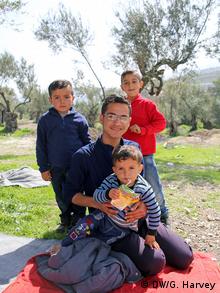
Μια οικογένεια Σύρων στη Λέσβο
Όσες επιφυλάξεις και αν εκφράζονται για τη στάση της Τουρκίας, όλοι αναγνωρίζουν ότι η γειτονική χώρα έχει προσφέρει καταφύγιο σε τρία εκατομμύρια πρόσφυγες, οι περισσότεροι εκ των οποίων προέρχονται από τη γειτονική Συρία. Όπως η Ελλάδα επισημαίνει ότι είναι δύσκολη η φύλαξη των θαλασσίων συνόρων λόγω γεωγραφικής θέσης, έτσι και η Τουρκία δηλώνει ότι δεν είναι εύκολη η επιτήρηση των κοινών συνόρων της, μήκους 1.500 χλμ., με τη Συρία και το Ιράκ. Τα τρία δισεκατομμύρια ευρώ που υπόσχεται η ΕΕ θεωρούνται οικονομική βοήθεια στις Βρυξέλλες, αλλά απλή προκαταβολή στην Άγκυρα. «Μήπως τελικά είναι οικονομικός ο λόγος της κωλυσιεργίας;» ρωτάμε τον Μίλτο Κύρκο, ευρωβουλευτή με Το Ποτάμι. «Οικονομικός δεν είναι. Τα χρήματα, τα οποία ζητάει η Τουρκία είναι χρήματα, τα οποία και η Ευρώπη θα έπρεπε να προσφέρει. Θα χρησιμοποιηθούν όχι ως δώρο προς το τουρκικό κράτος, αλλά σε οργανώσεις που αποδεδειγμένα προσφέρουν έργο για τους πρόσφυγες. Αυτό είναι το οικονομικό σκέλος, αλλά δεν πιστεύω ότι εκεί βρίσκεται η αιτία της καθυστέρησης. Είναι φανερό ότι η Τουρκία χρησιμοποιεί την προσφυγική κρίση σαν ένα διαπραγματευτικό ατού» τονίζει ο έλληνας ευρωβουλευτής.
Αυτός είναι και ο λόγος, για τον οποίο πολλοί κατηγορούν την Ευρώπη ότι αφήνεται στις ορέξεις της Τουρκίας, ενώ θεωρούν απογοητευτικά τα αποτελέσματα της συνόδου. Ωστόσο, η επικεφαλής των ευρωπαίων Πρασίνων Ρεμπέκα Χαρμς υπενθυμίζει τις ευθύνες των ίδιων των Ευρωπαίων. «Εγώ δεν συμμερίζομαι τη μεγάλη απογοήτευση για τα αποτελέσματα της συνόδου, γιατί δεν είχα και ιδιαίτερες προσδοκίες από τη σύνοδο» λέει η γερμανίδα ευρωβουλευτής. «Δεν συμμερίζομαι όμως ούτε την όποια αγανάκτηση για την Άνγκελα Μέρκελ ή τον Ζαν Κλωντ Γιούνκερ, για τους οποίους κάποιοι έγραψαν ότι παραδίδουν την Ευρώπη στα χέρια της Τουρκίας. Νομίζω ότι σε μία τέτοια διαπραγμάτευση η κ. Μέρκελ, ο κ.Γιούνκερ ή ο κ.Τουσκ είναι τόσο ισχυροί, όσο ισχυρή είναι και η ομάδα των χωρών που τους υποστηρίζει».
Απομονωμένη η Σλοβακία;
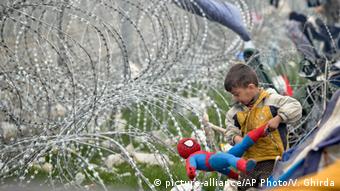
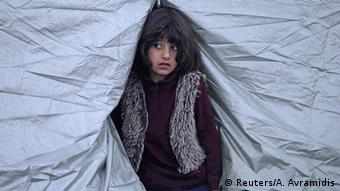
Ένα παιδί παίζει στην Ειδομένη
Η αλήθεια είναι ότι πολλοί δεν συμφωνούν με την «ευρωπαϊκή λύση» της Άνγκελα Μέρκελ που περνάει από την Τουρκία και θεωρούν, για δικούς τους λόγους, καλύτερη «ευρωπαϊκή λύση» το κλείσιμο του βαλκανικού διαδρόμου για τους πρόσφυγες. Λίγοι πάντως υποστηρίζουν τη θέση αυτή με τόση θέρμη και τόσο έντονες επικρίσεις απέναντι στην Ελλάδα όσο ο απερχόμενος πρωθυπουργός της Σλοβακίας Ρόμπερτ Φίτσο. Τη στάση αυτή έχει στηλιτεύσει όχι μόνο ο επικεφαλής του Ευρωπαϊκού Λαϊκού Κόμματος Μάνφρεντ Βέμπερ, αλλά ακόμη και η ίδια πολιτική ομάδα του Φίτσο. Απαντώντας μάλιστα σε σχετική ερώτηση ιταλού δημοσιογράφου, ο επικεφαλής των ευρωπαίων Σοσιαλιστών και Δημοκρατών στο Ευρωπαϊκό Κοινοβούλιο, Τζιάνι Πιτέλα, δηλώνει χαρακτηριστικά: «Η οικογένεια των ευρωπαίων σοσιαλιστών είναι κατά βάση ενωμένη. Όσο για την υπόθεση Φίτσo, νομίζω ότι εγώ και η ομάδα μου έχουμε τοποθετηθεί ξεκάθαρα: ζητήσαμε τον αποκλεισμό του Φίτσο από την ομάδα, είναι ξεκάθαρη η θέση μας. Δημοσιεύσαμε μάλιστα ανακοίνωσή μας σε μεγάλες ευρωπαϊκές εφημερίδες, όπου εξηγούμε τις πολιτικές μας προτεραιότητες. Ο Φίτσο είναι απομονωμένος».
Γιάννης Παπαδημητρίου, Στρασβούργο

Εκκένωση της Ειδομένης, μετεγκατάσταση προσφύγων

Πολιτική

Εκκένωση της Ειδομένης, μετεγκατάσταση προσφύγων

Η ελληνική κυβέρνηση αποφάσισε, όπως όλα δείχνουν, την εκκένωση και τη μεταφορά των προσφύγων της Ειδομένης σε νέα κέντρα φιλοξενίας μόλις ολοκληρωθεί η κατασκευή τους τις επόμενες μέρες, γράφει το Spiegel Online.
Κλείνει πλέον ερμητικά ο λεγόμενος Βαλκανικός Διάδρομος μετά την απόφαση της Σλοβενίας και της Σερβίας να κλείσουν τα σύνορα σε όσους δεν διαθέτουν ταξιδιωτικά έγγραφα. Όπως επισημαίνει το Spiegel Online, η Ελλάδα έχει πλέον αποδεχθεί τη νέα πραγματικότητα ότι χιλιάδες πρόσφυγες δεν μπορούν να συνεχίσουν το ταξίδι τους στην δυτική Ευρώπη και ετοιμάζει 15 νέα κέντρα φιλοξενίας για 17.400 ανθρώπους. Αν όλα πάνε, σύμφωνα με το χρονοδιάγραμμα, το πρώτο κατάλυμα θα είναι έτοιμο την ερχόμενη Κυριακή.
Στην Ειδομένη ζουν σήμερα περίπου 13.000 πρόσφυγες υπό ιδιαίτερα δύσκολες συνθήκες. Και επειδή οι εικόνες από την περιοχή κάνουν σχεδόν καθημερινά το γύρο το κόσμου η ελληνική κυβέρνηση αποφάσισε, προφανώς, να παρέμβει. Ο Γιώργος Κυρίτσης, εκπρόσωπος συντονιστικού για τη διαχείριση της προσφυγικής κρίσης, επιβεβαίωσε χθες το βράδυ στο Spiegel Online ότι θα γίνει μετεγκατάσταση των προσφύγων της Ειδομένης μόλις ετοιμαστούν οι νέοι χώροι φιλοξενίας. Όπως δήλωσε ο Έλληνας εκπρόσωπος «είναι προς το συμφέρον των προσφύγων να εγκατασταθούν σε κατάλληλα καταλύματα. Η εκκένωση θα γίνει προσεκτικά, αλλά θα καταστήσουμε σαφές στους πρόσφυγες ότι προς το παρόν δεν υπάρχει δυνατότητα να συνεχίσουν το ταξίδι τους και ότι δεν υπάρχει κανένα νόημα να παραμένουν εκεί».
800 ευρώ ζητούν οι διακινητές από πρόσφυγες στην Ειδομένη
 8.340 πρόσφυγες ζουν αυτή τη στιγμή στο νομό Αττικής
8.340 πρόσφυγες ζουν αυτή τη στιγμή στο νομό Αττικής
Τα νέα κέντρα φιλοξενίας ωστόσο δεν αρκούν για να καλυφθούν οι υπάρχουσες ανάγκες, μιας και σύμφωνα με την ελληνική κυβέρνηση, περισσότεροι από 30.000 πρόσφυγες βρίσκονται σήμερα στην ελληνική επικράτεια. Από αυτούς 6.830 έχουν καταγραφεί σε νησιά του Αιγαίου, ενώ 8.340 πρόσφυγες ζουν αυτή τη στιγμή στο νομό Αττικής. Οι περισσότεροι από τους πρόσφυγες στην Αττική ζουν σε τρία κέντρα μετεγκατάστασης στην Αθήνα και κάποιοι άλλοι έχουν εγκατασταθεί στο λιμάνι του Πειραιά.
Πολλοί πρόσφυγες ωστόσο είναι αποφασισμένοι να μην εγκαταλείψουν την προσπάθεια και απευθύνονται σε διακινητές. Σύμφωνα με τις αρχές της ΠΓΔΜ και της Ελλάδας, οι συναντήσεις διακινητών και προσφύγων γίνονται σε ξενοδοχείο στους Ευζώνους, σε απόσταση 500 μέτρων από τα σύνορα ΠΓΔΜ-Ελλάδας. Για 800 ευρώ οι διακινητές υπόσχονται στους πρόσφυγες ότι περίπου σε οκτώ ώρες πεζοπορίας θα έχουν φθάσει στο Σελεμλί, στην απέναντι πλευρά των συνόρων.
Spiegel Online / Στέφανος Γεωργακόπουλος
Poland’s constitutional stand-off deepens

POLITICS

Poland’s constitutional stand-off deepens

Poland's constitutional crisis is deepening after the Constitutional Tribunal ruled that changes made by the government have neutered the country’s highest court. The government said it will ignore the ruling.
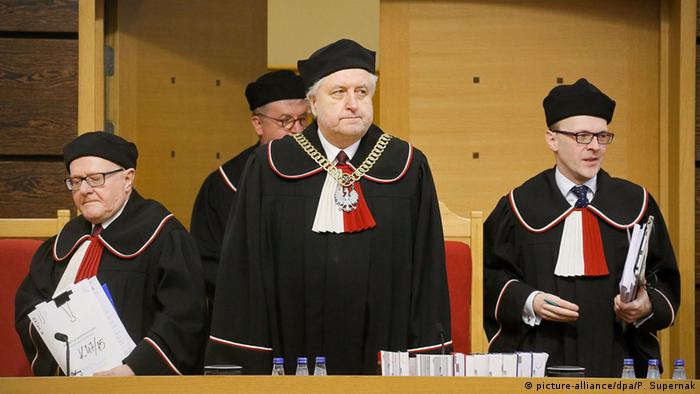
Polen Warschau Verfassungsgerichtshof Richter Andrzej Rzeplinski
The ruling right-wing Law and Justice (PiS) government, which won a majority at parliamentary elections in October, moved rapidly in late 2015 to amend the law on how the Constitutional Tribunal functions. The court is Poland's highest legislative body ruling on the constitutionality of laws.
A stand-off ensued between the government and an opposition centered around the Committee for the Defense of Democracy (KOD) after the government refused to recognize three judges chosen by the previous government.
Instead, the new government chose its own candidates, who were sworn in by President Andrzej Duda – himself close to PiS - but they have yet to be allowed by the tribunal to take up their positions.
The tribunal's president, Andrzej Rzeplinski, said the constitution gives the tribunal the right to examine the new law, while the government says it cannot because the new law means that the court only has 12 sitting judges and therefore not enough for a quorum.
Twelve judges took part in the sitting that started Tuesday, instead of the 13 specified by the government-initiated amendments. The ruling was - as expected - not backed by two judges sworn in by President Andrzej Duda.
The government's critics claim it is reverting to the confrontational style of politics that characterized the 2005-7 PiS-led administration - the first since the end of communism in 1989 with a parliamentary majority - and that the tribunal is one of the few checks on the government.
“This will likely worsen the Polish government's reputation abroad and increase divisions and tensions within society,” Gavin Rae, a sociologist at Kozminski University in Warsaw told DW.
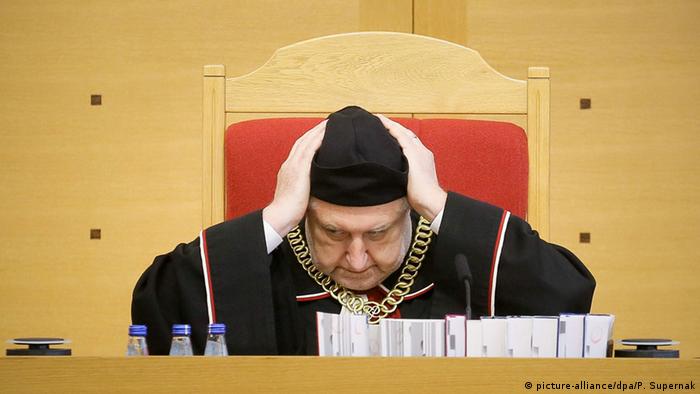
Polen Warschau Verfassungsgerichtshof Richter Andrzej Rzeplinski
Tribunal chief justice Andrzej Rzeplinski is dismayed about the attack on his court
Olive branch snapped off
PiS MEP Kazimierz Michal Ujazdowski came up with a compromise solution over the weekend, but negative reactions on both sides indicate that the political standoff has some way to run. Ujazdowski suggested that the three disputed judges elected by the current parliament take their places on the tribunal and as vacancies occur that the three judges chosen by the previous parliament would fill them.
But Prime Minister Beata Szydlo reiterated Monday that her government would not accept the court's ruling. She said the outgoing government of Civic Platform (PO) had politicized the tribunal in June last year as an attempt to impede PiS's legislative program in the event they lost the election. PO MP Rafal Grupinski, meanwhile, dismissed Ujazdowski's idea this week, saying it was an “encouragement to break the constitution.”
“For the government to say in advance it will not accept the tribunal's ruling is serious,” Nicholas Richardson, a British lawyer practicing in Warsaw, told DW. “By definition, the tribunal is the final arbiter on the constitution and the validity of laws in Poland and for any government simply to ignore its rulings has profound implications for the rule of law and the protection of the citizen from the arbitrary exercise of power by the state.”
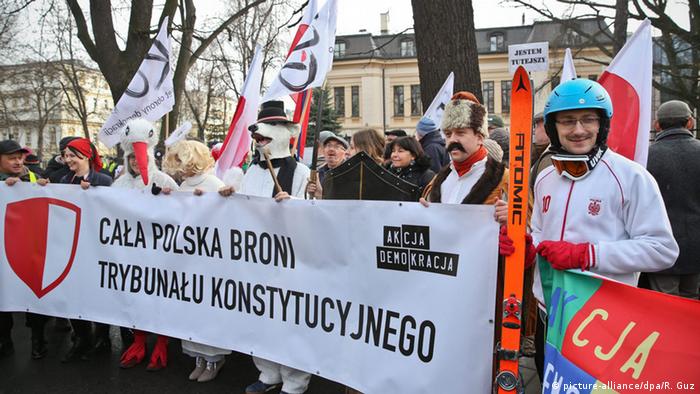
Polen Verfassungsgerichtshof Protest
Demonstrators took part in an anti-government protest
International censure pending
The court's ruling comes amid ongoing international investigations into the state of Polish democracy.
The European Commission is investigating whether the recent reforms of the tribunal are in line with the rule of law. The commission launched its unprecedented "rule of law" probe against Poland in January and will set out its findings on March 11.
Poland's Foreign Minister Witold Waszczykowski wrote recently to Frans Timmermans, the commission's vice president, saying concerns about the tribunal and rule of law in Poland were “groundless.”
The Council of Europe´s Venice Commission is also investigating the constitutional reforms; this time at the request of Waszczykowski. It also reports this week.
Jaroslaw Kaczynski, who is the head of PiS and the power behind the scenes in the government, this week attacked the Commission for “compromising” itself after a leaked report criticizing the government's action appeared in the local press over the weekend. “Let no one count on us retreating,” Kaczynski said. “We'll work out Polish issues and Polish problems on our own […] We will not be a colony, and don't let anyone expect that the authorities, that PiS, will agree to this status."
“We recall that former president Lech Kaczynski, brother of Jaroslaw, said in 2006 that the judgments of the tribunal are universally binding and that they have to be respected,” a KOD spokeswoman told DW.
Possible ramifications
Although the chances of Poland losing its EU voting rights are small, many feel the conflict will weaken Poland's international position when the country is seeking support to strengthen NATO's troop presence in Central Europe, the main topic of NATO's July summit in Warsaw.
“The tribunal's ruling will probably be taken into consideration by the Venice Commission in preparing its final opinion on Poland and this may have a negative influence on the perception of Poland in the international arena,” according to Justyna Jawor, a legal specialist at Polityka Insight, a think tank based in Warsaw.
Opinion polls, meanwhile, suggest that the crisis has hit support for PiS among more moderate and centrist voters. “Up until this point, the government's actions could, with a generous benefit of the doubt, be looked upon as political tit for tat. This declaration by the prime minister – if carried out by the government – does appear to put the government above the law which, putting it mildly, is not a good position for any government to be in,” Richardson concludes.

Tuesday, March 8, 2016

Refugees suffer as Greece, EU pass the buck

Refugees suffer as Greece, EU pass the buck

Deliberate foot-dragging inside and outside Greece's borders have rendered a humanitarian crisis in the EU more likely, reports Pavlos Zafiropoulos from Athens.
Athen Griechenland Flüchtlinge
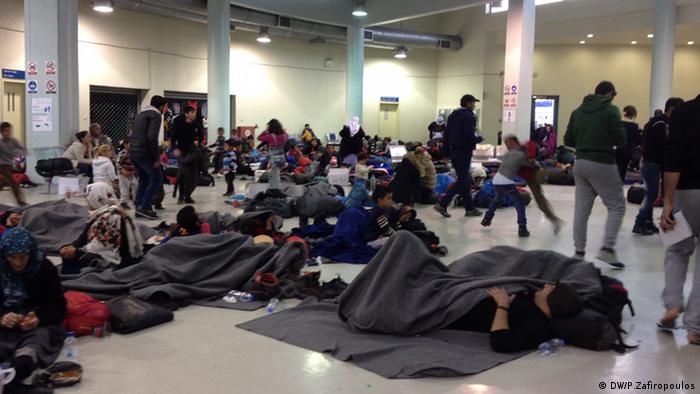
On February 24, 20-year-old Sabeen* sat in the port of Piraeus outside a crowded temporary refugee camp housed in a building once used as a waiting area for tourists heading to the Greek islands. She had just arrived together with several hundred other migrants and refugees and was hoping to continue her journey to northern Europe without delay.
Sabeen was the last of her family to abandon Syria. Her mother and siblings are already in Denmark, her father was killed in the war. Sabeen initially resisted leaving her country, hoping the war would end and she would be able to complete her degree in dentistry which she has studied for two years. But the recent bombing of her hometown of Aleppo rendered that impossible. "My home is crashed," she then told DW. "I just want to go to my mother. I just want peace."
But timing was not on Sabeen's side. As she prepared to make the hazardous sea crossing from Turkey to the Greek islands, Austria began imposing strict daily limits to the number of refugees allowed to enter its territory. Other countries along the Balkan Route swiftly followed suit, slowing the number of refugees from leaving Greece over the Macedonian border to a trickle of 200-300 a day at best.
Twelve days later and with Europe's leaders debating whether the route should be described as 'closed' or not, Sabeen remained trapped in Greece, living in the fields around the Idomeni border crossing in increasingly dire conditions. The refugee camp was initially set up to host about 1,500 refugees for a few days at a time. Today 14,000 people are estimated to be in the camp which swells daily with new arrivals. "The situation is very terrible," she told DW by phone. "I am afraid here because there are some bad guys around and they know I am without my family."
 
Watch video01:02

Situation for refugees in Idomeni worsens

Strategic negligence
Currently over 36,000 refugees and migrants are thought to be trapped in Greece with the islands receiving roughly 2,000 new arrivals from Turkey every day. The rapidly worsening situation has left the Greek government scrambling as it desperately tries to set up new camps to house the migrants and avoid a full-blown humanitarian crisis.
Yet the move to close the Greek-Macedonian border, while sudden, was hardly far from unexpected. As such the government has come under fire for not doing more to prepare for such an outcome. Those criticisms echo those heard in many European capitals where Greece is suspected of exacerbating the problem through a form of strategic negligence in order to draw concessions from Europe.
Those criticisms are probably not all entirely misplaced. "I believe that for the first 6-7 months [of the Tsipras administration] there was a strategy to consciously do nothing," says Angeliki Dimitriadi a Visiting Fellow at the European Council on Foreign Relations and Research Fellow at the Hellenic Foundation for European and Foreign Policy. "They had the opinion that if they let the irregular flows move on, then it would become a European problem and it would have to be solved at a European level."
However Dimitriadi argues that this approach ultimately backfired on the Syriza government which ended up on the wrong side of both geography and the change in sentiment in Europe following the Paris terrorist attacks and the Cologne sexual assaults. "They took a political risk. They didn't realize that other European countries would offer financial support much easier than they would relocate people. Especially now that the discourse is focused much more on security than humanitarian concerns." As such Greece is left with promises of financial support, but lost time and goodwill in setting up the necessary infrastructure to handle large numbers of migrants and refugees remaining in the country. Meanwhile the borders look set to remain shut.
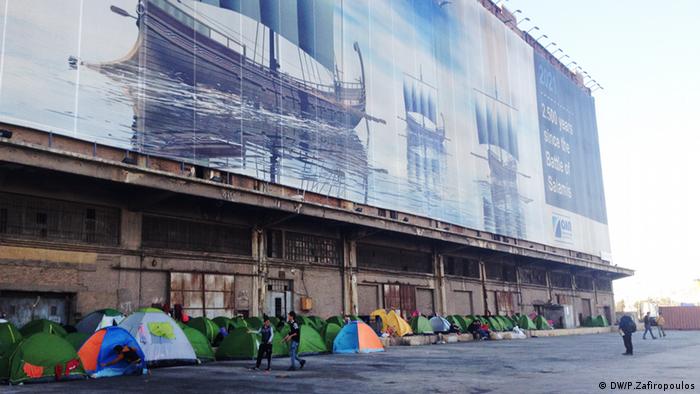
people camping out in port terminal

copyright: Pavlos Zafiropoulos
Trapped and desperate, the refugees in Greece are becoming political bargaining chips
The Greek migration ministry has endeavoured to ramp up efforts to meet the country's commitments in setting up hotspots and screening and registering migrants. Ministry sources now bristle when asked about accusations of delays, arguing that other European countries are behaving hypocritically.
"Whatever Greece has committed to doing it has now met," a ministry source told DW, saying that the hotspots were close to fully operational and that there were already places for 20,000 migrants with another 10,000 due to be prepared within the next 10 days. "But say we create another 20,000 places, is that the issue? The issue is for the relocation program to operate and for other European countries to live up to their obligations."
Refugees as bargaining chips
Dimitriadi argues that Greece is only one player in a large and complex phenomenon.
"I don't believe that the Syriza government's policies significantly increased the flow of refugees," she says, "what they could have done is have improved the structures in place. But only Turkey could realistically reduce the flow, and let's be honest, they haven't wanted to. There has been a long-term instrumentalization of the refugee crisis on the part of Turkey which Greece could never counter."
The view that Turkey has sought to use the crisis to extract concessions from Europe was all but confirmed at the EU-Turkey summit. At the same time there are few signs of a crackdown on the people smugglers operating in Turkey even in the face of the NATO operation in the area. According to a recent article by the Kathimerini newspaper, last Thursday the Greek Defense Minister presented a NATO report concerning two ships (one German and one Canadian) taking part in the operation. According to the report, 30 dinghies carrying refugees were identified and their coordinates sent to the Turkish authorities, but only three were ultimately intercepted by the Turkish coast guard.
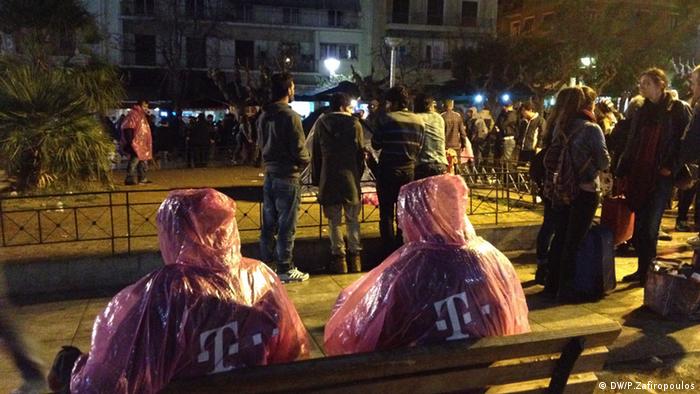
people in the rain in a park

copyright: Pavlos Zafiropoulos
Greece is struggling to accommodate the daily influx of refugees forcing many to camp out in the open
Even in the best-case scenario, it now appears highly likely that Greece will very soon have to house upwards of 50,000 migrants and refugees who will have no choice but to stay for an extended period of time in a country ill-prepared to accommodate them. While the recent worsening of the crisis in Greece has seen impressive food-drives spring up around the country in recent days, NGOs warn that such efforts will not be enough.
"In Idomeni alone we currently need 30,000 meals per day," Marie-Elizabeth Ingres, Medecins Sans Frontieres' Head of Mission in Greece, told DW. "The current actors cannot manage the situation alone... What I hope for is a common European policy that treats refugees as human beings who have a right to flee war and persecution."
Or to put it another way, for the people like Sabeen who are currently living in tents in a damp field next to a closed border to be treated as something more than political bargaining chips.

UN chief praises German moral leadership on migrant crisis

REFUGEES

UN chief praises German moral leadership on migrant crisis

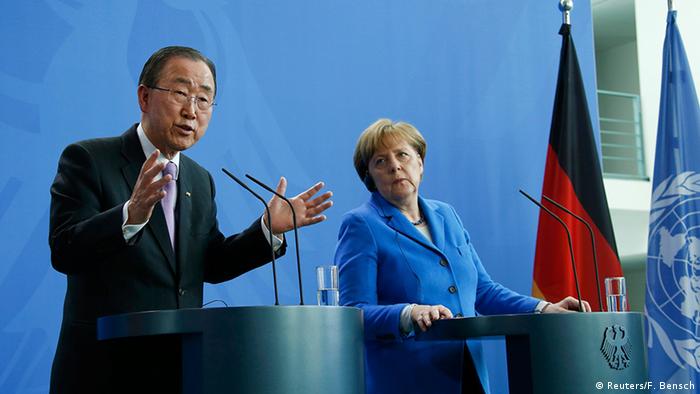
UN General Secretary Ban Ki-Moon has warned against anti-immigrant parties seeking to divide communities. The UN chief praised Germany's principled leadership on the refugee crisis.
Deutschland Berlin Pressekonferenz Ban Ki Moon und Merkel im Kanzleramt
Ban Ki-Moon praised German Chancellor Angela Merkel's leadership on the refugee crisis while striking out against asylum restrictions in some European countries and a surge in anti-immigrant politics.
Calling Merkel a "true moral voice," Ban said in Berlin on Tuesday, the Chancellor has shown compassion and leadership in pursuing policies that while not always easy were just.
While Merkel tried to put "the protection of every individual person" in focus, other politicians have "chosen the easy path," the UN chief said.
"Extreme right-wing and nationalistic political parties are inflaming the situation where we need to be seeking solutions, harmonious solutions based on shared responsibilities," he cautioned.
He said Europe could do much more to help refugees, and not only with money.
The comments came a day after the EU and Turkey appeared to have agreed on the outlines of an agreement to handle a migrant crisis that has driven deep divisions with 28-member bloc.
 
Watch video02:17

The Q&A on EU-Turkey refugee deal

Under the agreement, Turkey would take back migrants from Greece in exchange for Europe agreeing to accept Syrian refugees directly from Turkey.
The policy is intended to dissuade human smugglers and migrants from making the dangerous sea journey to Greece and lead to a more organized movement of legitimate asylum seekers to Europe.
In exchange, the EU would provide 6 billion euros ($6.6 billion) over three years to improve the conditions of Syrians in Turkey, the EU would ease visa restriction on Turkish citizens and Turkey's stalled EU membership process would be accelerated.
The proposed agreement has come under criticism, particularly over questions of its compatibility with international human rights law. Echoing concerns from the UN's refugee agency, Ban demanded Europe maintain "humanity and pay attention to human rights."